
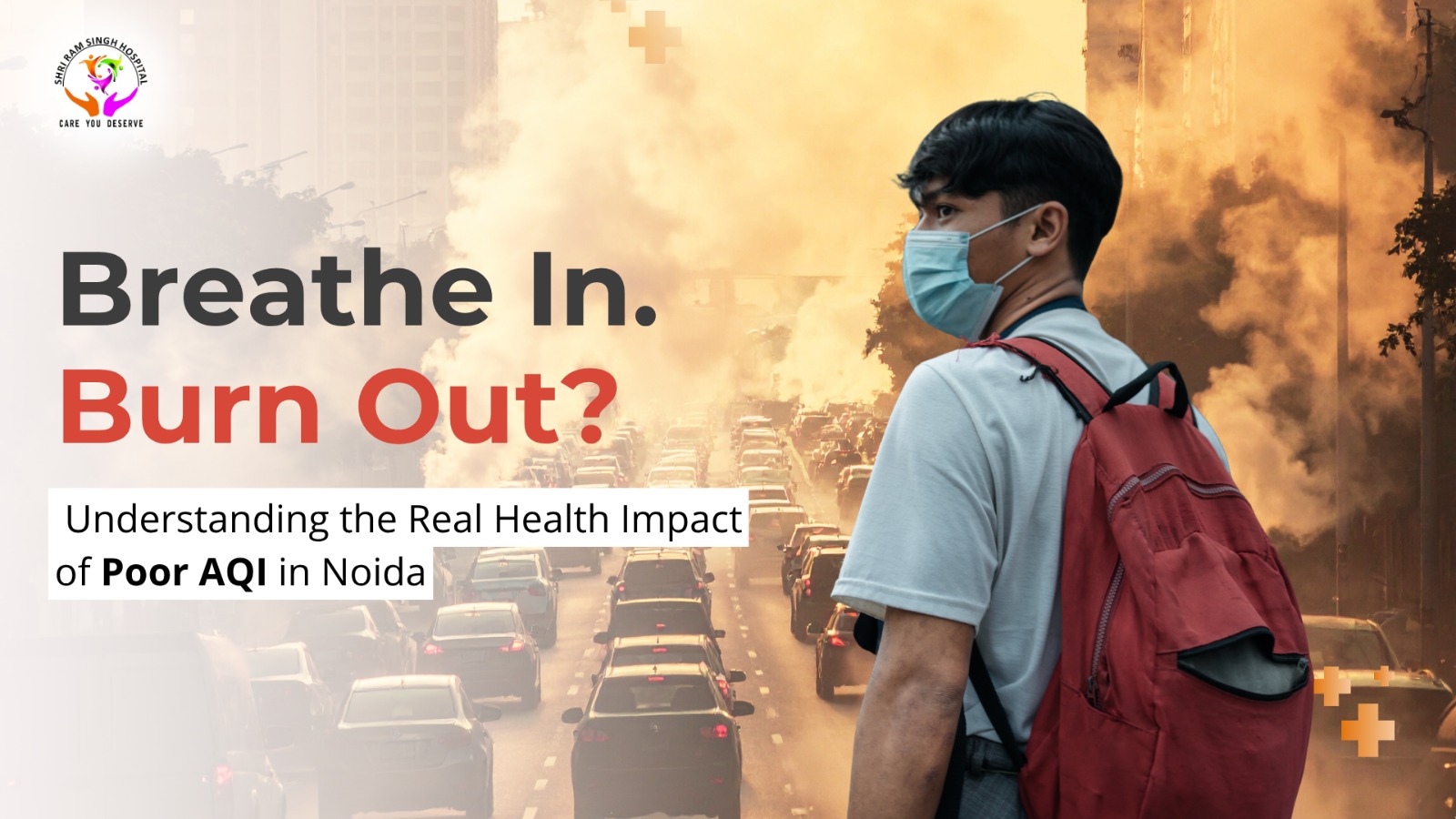
Living or working in Noida during October to February? You’re likely exposed to AQI levels that range from ‘Very Poor’ to ‘Severe’—without even realizing the silent damage it may be causing.
At SRS Multispecialty Hospital, Sector 70 Noida, we’re witnessing a rising number of patients—especially working professionals—reporting symptoms like persistent fatigue, dry cough, chest discomfort, brain fog, allergies, and shortness of breath. In many cases, these are not due to viral infections, but direct effects of prolonged exposure to toxic air.
What is AQI and Why Should You Care?
The Air Quality Index (AQI) is a standardized measure used to indicate how polluted the air is. An AQI value:
- 0–50 is considered good,
- 101–200 is unhealthy for sensitive groups, and
- 300+ is classified as hazardous to all.
Noida, like much of NCR, frequently crosses 250–400 AQI during winter months, particularly after Diwali and during crop-burning season.
Health Problems Caused by Poor AQI
Whether you’re commuting, exercising outdoors, or simply working in a poorly ventilated office, you are likely inhaling pollutants like PM2.5, PM10, nitrogen dioxide, and ozone.
These pollutants can cause or worsen:
- Respiratory issues: Cough, asthma, sinusitis, bronchitis
- Cardiovascular strain: Increased heart rate, blood pressure, chest pain
- Neurological effects: Poor concentration, headaches, fatigue
- Immunity suppression: Higher risk of infections
- Sleep disturbance and anxiety
Even healthy individuals between the ages of 25–60—with no prior conditions—are now experiencing pollution-triggered health decline.
Common AQI-Linked Symptoms We See at SRS Hospital
- Persistent dry cough or sore throat
- Chest tightness or shortness of breath (especially in the mornings)
- Eye irritation and watery eyes
- Low oxygen saturation during pulse check
- Increased frequency of headaches
- Lethargy, sleepiness, and foggy thinking
These symptoms are often misdiagnosed as seasonal flu—but are often pollution-related inflammation and reduced lung function.
High-Risk Groups to Watch
You should be extra cautious if you belong to one of the following groups:
- Office-goers with long commutes
- Children and teenagers
- Senior citizens
- Pregnant women
- Patients with asthma, COPD, diabetes, or heart disease
What You Can Do: Pollution-Health Management at SRS Hospital Noida
We provide comprehensive Pollution-Impact Screening Packages that include:
- Pulmonary Function Test (PFT/Spirometry)
- CBC with ESR and CRP (to check for inflammation)
- Oxygen saturation check
- Allergy profile (for pollution-triggered asthma or rhinitis)
- Vitamin D and immunity profile
- Doctor consultation with pulmonologist or internal medicine expert
We also offer:
- Nebulization therapy
- Prescription inhaler management
- Counseling for lifestyle and environment changes
- Pediatric and geriatric respiratory care
Preventive Tips to Stay Safe in Noida During High AQI
- Check AQI levels daily via apps or websites
- Wear certified N95 masks during travel
- Use indoor air purifiers at home and workplace
- Avoid early morning walks or outdoor workouts
- Keep windows closed during peak hours (6–10 AM and 6–9 PM)
- Increase intake of antioxidants (fruits, green leafy vegetables, herbal teas)
- Stay hydrated—pollution dries out the lungs and sinuses
If you’re feeling unwell without an obvious cause—especially during the winter months—it may be time to ask: Is it the air?
Let our experts at SRS Multispecialty Hospital, Sector 70 Noida help you detect, protect, and recover—before pollution takes a toll on your long-term health.
Book Your AQI Impact Screening Today
📍 SRS Hospital, Sector 70, Noida
☎️ 8971172563 / 9899925183
🌐 www.shriramsinghhospital.com